Electric vehicles (EVs) are quickly taking the world automotive industry by storm, yet it has one significant drawback that keeps them at bay-battery technology. This revolution is made possible today by lithium-ion batteries, but they have disadvantages of having a short range, require significant time to charge, and are also dangerous. Introduce solid-state battery, a breakthrough innovation that may entirely re-define the performance of EVs by 2030. It is one of the most anticipated clean mobility technologies, as this next-generation technology promises to have higher energy density, quicker charging, and greater safety.
What are Solid-State Batteries?
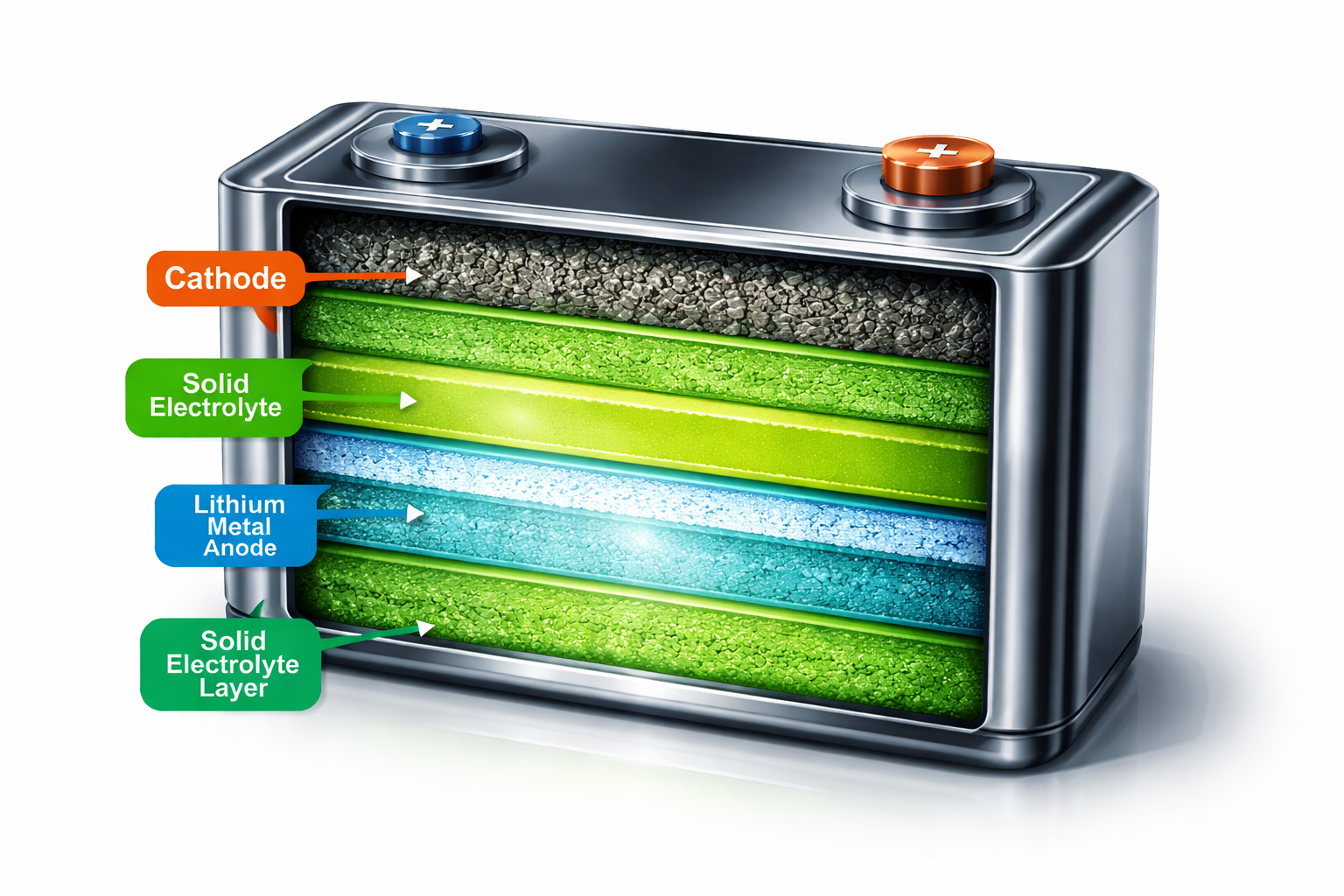
In solid state batteries, the liquid or gel based electrolyte used in conventional lithium-ion batteries is substituted with a solid electrolyte. The implications of this seemingly simple change on performance and safety are colossal.
The operating principle of Solid-State Batteries.
In contrast to traditional batteries, solid-state batteries make use of solid substances (e.g. ceramics or polymers) to conduct ions between electrodes. This removes the use of flammable liquid electrolytes which may cause a leak or fire. The lithium metal anodes also can be used with the solid electrolyte, which increases energy storage capacity to a great extent. This new development enables engineers to re-architecture the battery, which becomes smaller and more efficient.
The principal differences to Lithium-Ion Batteries.
Conventional lithium-ion batteries use liquid electrolytes that may degrade with time and be dangerous. Solid-state batteries on the contrary are more stable and compact. They have better energy density, which implies that EVs have a longer range on a single charge. Also, they are less susceptible to overheating, which enhances the vehicle safety and reliability in extreme conditions.
The Importance of this Technology.
The change to solid-state batteries is not merely an upgrade- it is a transformation. Addressing the largest pain points of EV adoption like range anxiety and charging time this technology can hasten the worldwide shift to electric mobility. It also sets the path to innovation in various industries such as renewable energy storage and portable electronics.
The benefits of Solid-State Batteries in EVs.
The advantages of solid-state batteries are potentially effective and significant to transform the EV scene.
Higher Energy Density
A major benefit is that they are capable of storing more energy in less space. It implies that EVs will be able to travel longer distances without adding to the size of the battery: up to 800 kilometers on a single charge. This is particularly useful in long distance travel and commercial vehicles.
Faster Charging Times
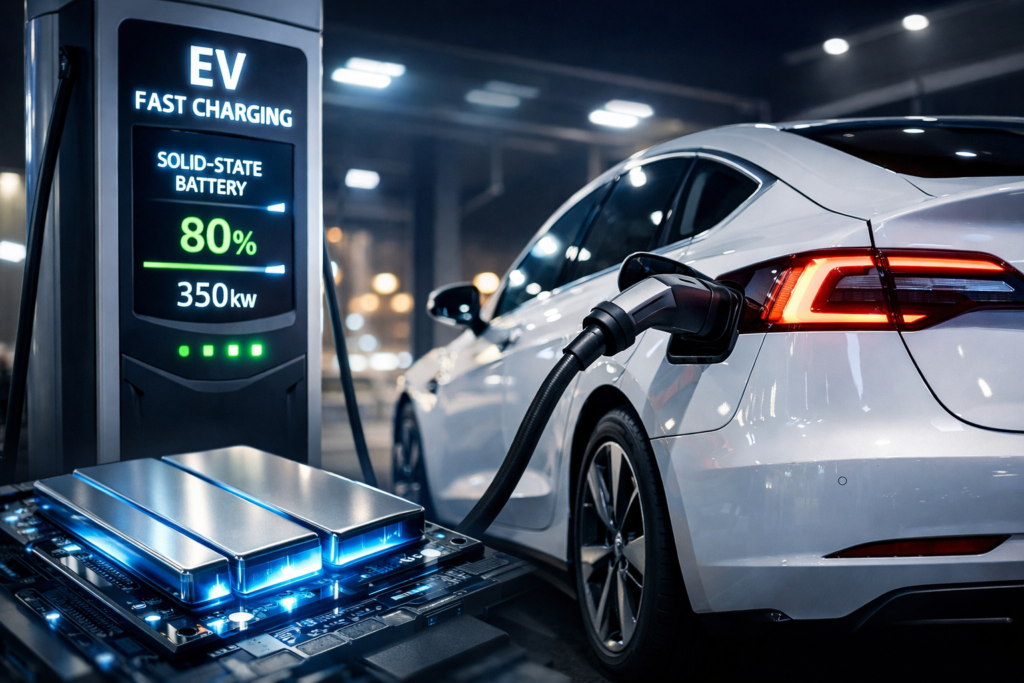
Charging times can be greatly reduced by solid-state batteries. EVs would be more convenient in everyday use and long-distance travel because a driver could recharge his or her vehicle in minutes, unlike hours. This technology with faster charging infrastructure would be able to compete with the ease of filling up traditional cars.
Improved Safety
The main concern with the existing battery technology is safety. Batteries in solid state do not contain flammable liquid electrolytes and fire/explosion is less likely to occur. This will ensure that EVs are safer to both consumers and the manufactures, particularly in extreme weather conditions or in high-performance environments.
Issues Crippling the Adoption.
Even with their potential, solid-state batteries are not available yet, because of a number of challenges.
High Production Costs
It is now costly to produce solid-state batteries. Large-scale production is challenging because the materials and processes involved are more complicated than those of lithium-ion batteries. Rampant adoption might be restricted to high-end EV models until the cost is reduced.
Scalability Issues
Another challenge is the increase in production to satisfy the world demand. Firms continue to struggle in coming up with effective production methods that can manufacture these batteries on a commercial scale. The development of the required infrastructure will be time and cost consuming.
Durability Concerns
There are difficulties with longevity in solid-state batteries, although they are promising. The frequent charging and discharging may lead to performance degradation. The researchers are working on new materials and designs to increase the durability and make them reliable in the long term.
The Future of EVs that use Solid-State Batteries.
The prospects of electric cars are unbelievably bright with the introduction of solid-state batteries.
Transforming Vehicle Design
Automakers can repackage vehicles to make them more efficient and spacious with smaller and lighter batteries. This may result in new designs of EVs which were not feasible before, namely better aerodynamics and more comfort to the passengers.
Speeding up the EV Adoption of the world.
The accelerated charge and increased range will solve the issues of the consumers and EVs will be more attractive to a wider market. This would greatly increase the adoption levels across the globe and assist governments to achieve emission reduction goals.
Environmental Impact
Solid-state batteries will be more environmentally friendly as they are more efficient and have better longevity. Less battery waste, and increased recyclability will help create a more sustainable energy ecosystem.
Conclusion
The solid-state batteries do not simply improve upon the existing ones but they are a paradigm shift in the way electric vehicles store and use energy. This technology can eliminate the remaining obstacles to mass EV adoption by addressing such critical problems as safety, range, and charging speed. Despite the challenges including cost, scalability, etc., the solid-state batteries are getting closer to reality thanks to the rapid progress in the field of research and the growing number of investments by global automakers.
By the year 2030, solid-state batteries will potentially be the technology of the electric vehicle age. Their influence is not confined to the field of transportation, but their effect on energy storage, sustainability, and the overall clean technology ecosystem is also present. Simply put, this innovation will transform not only our driving experience, but also the powering of the future.
Requested questions (FAQs)
1. What is the advantage of solid-state batteries over lithium-ion batteries?
Batteries made of solid state have a greater energy density, quicker charging (because of the lack of liquid electrolytes), and are better-protected against safety risks.
2. When will solid-state batteries be available in EVs?
A number of analysts believe that it will be available commercially by the end of the 2020s, and will be widely adopted in about 2030.
3. Do solid-state batteries make them safer?
Yes, they are much safer as they remove liquid combustible elements, lowering the possibility of fire.
4. Why are solid-state batteries expensive?
Such a high cost is attributed to complicated materials and production that are yet to be streamlined to produce at a large scale.
5. Will lithium-ion batteries be phased out, in favor of solid-state batteries?
Although they might soon take over the market, lithium-ion batteries will probably still stay in the market to serve some purposes because of price benefits.